

Partypoker casino Plinko
Introduction: what Partypoker casino Plinko actually offers
Plinko looks almost too simple to deserve a serious review. You choose a stake, set a risk level, drop a ball, and watch it bounce through a field of pegs until it lands in a multiplier slot. That is the whole visual idea. But after testing Partypoker casino Plinko in practical terms, I can say the simplicity is slightly deceptive. Behind the clean interface sits a format built around pace, variance, and instant feedback.
For players in Canada who are used to reels, paylines, Partypoker Casino bonus page rounds, and long slot sessions, Plinko feels different from the first minute. It removes the theatrical layer and leaves you face to face with probability. There are no symbols to interpret, no expanding wilds, no staged bonus sequence. Instead, the tension comes from a single path: where the ball will go, how often low multipliers appear, and how long it takes before a high-value result shows up, if it shows up at all.
That is exactly why Plinko has become so visible on modern gambling platforms. It is easy to understand, fast to start, and highly watchable. At the same time, it can produce very different experiences depending on the selected risk mode and the player’s expectations. In this article, I will focus strictly on Partypoker casino Plinko as a game page product: how it works, what matters before launching it, how the session rhythm feels in real play, and who is likely to enjoy it.
Why Plinko attracts so much attention from players
The first reason is obvious: Plinko is visually intuitive. Even a new player understands the premise in seconds. A ball drops from the top, collides with pegs, changes direction repeatedly, and ends in one of several payout zones at the bottom. There is no learning curve in the traditional sense. That low entry barrier matters because many casino games ask players to process too much information before the first round even begins.
The second reason is more important. Plinko compresses suspense into a very short cycle. In a slot, anticipation is often built through reel animation, sound design, and feature triggers. In Plinko, suspense is more direct. The ball is always visible, and every bounce creates a tiny moment of uncertainty. That makes the outcome feel immediate, even though the result is still governed by a random number process behind the scenes.
I also think Plinko benefits from a rare design advantage: it is one of the few gambling formats where the player can clearly see the route between stake and result. That visibility creates emotional engagement. You are not just receiving an outcome; you are watching it travel toward you. This does not make the result more controllable, but it does make it more psychologically intense.
One practical observation stands out here. In slots, players often remember bonus rounds. In Plinko, they remember near-misses at the edge multipliers. That memory pattern says a lot about the game’s appeal. It is built less around spectacle and more around tension created by trajectory.
How the core Plinko mechanic works in practice
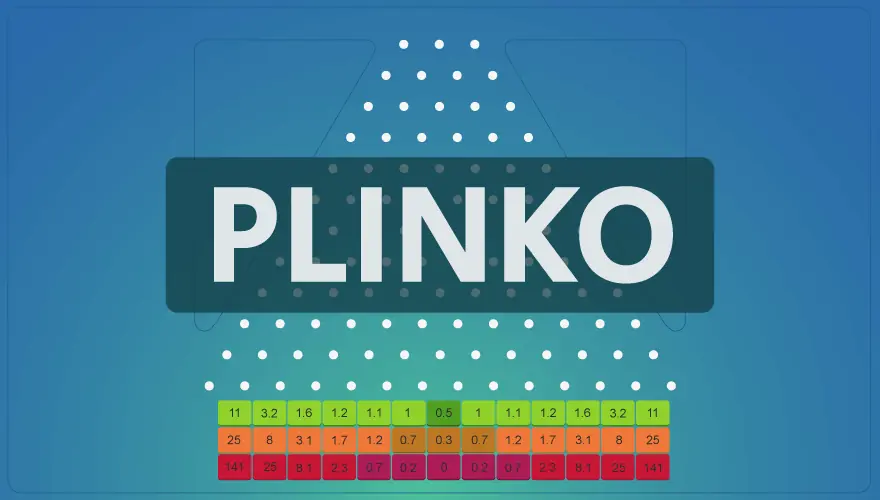
At its base, Partypoker casino Plinko uses a drop-and-bounce structure. The player selects a bet size, usually chooses a risk profile, and in many versions can also adjust the number of rows. Then the ball is released from the top of the board. As it hits each peg, it deflects left or right until it reaches one of the multiplier pockets at the bottom.
What matters for the player is not just the animation, but the distribution of outcomes. Lower multipliers tend to cluster around the center, while the larger multipliers usually sit near the far edges. That arrangement is not cosmetic. It reflects the statistical logic of the format: central landing zones are more common, edge results are rarer, and the biggest returns are designed to appear infrequently.
Here is the practical point. A Plinko round is not a miniature slot spin. It is closer to a probability funnel. Most outcomes are pulled toward the middle of the distribution, while the extreme results exist to create upside and volatility. This is why players can experience long stretches of modest returns even when the game feels active and exciting.
Another detail worth understanding is that the visible ball path does not mean the game is based on physical skill. The movement is presented as a bouncing object, but in regulated digital casino environments the outcome is still tied to certified randomness. The animation expresses the result; it does not give the player a way to influence it.
| Element | What the player sees | What it means in real play |
|---|---|---|
| Ball drop | A simple release from the top of the board | The round starts instantly, with almost no downtime |
| Peg collisions | The ball changes direction many times | Suspense builds through visible uncertainty, not through bonus buildup |
| Multiplier slots | Different payout values at the bottom | Most common results are modest; top values are rare by design |
| Risk setting | Low, medium, or high style options in many versions | The shape of the payout distribution changes significantly |
| Rows | More or fewer bounce levels, depending on version | Session feel and spread of outcomes can change noticeably |
Risk levels, board logic, and why the same game can feel very different
This is where Plinko stops being merely simple and starts becoming strategically interesting. On Partypoker casino Plinko, the choice of risk level can change the entire session profile. Low risk usually compresses the payout range. You tend to see more frequent small returns, but the ceiling is lower. High risk stretches the range. Small or empty-style outcomes become more common, while the top multipliers become the reason to stay in the session.
That difference is not academic. It changes how the game feels minute by minute. Low risk can create a smoother ride, but some players will find it repetitive because the dramatic moments are limited. High risk is more volatile and emotionally sharper. It can feel exciting very quickly, but it can also produce dry runs that erase a bankroll faster than expected.
Row count, where available, adds another layer. More rows generally mean more collision points and a wider spread between ordinary and exceptional outcomes. Fewer rows often produce a shorter, cleaner round structure. The important thing is not to treat these settings as cosmetic toggles. They alter the rhythm, the distribution, and the patience the game demands.
A useful way to think about it is this: Plinko is one of the few casino formats where one settings change can transform the same interface from “steady and light” to “sharp and swingy.” That flexibility is part of its appeal, but it is also where many players misread the game.
What creates the game’s tempo and why sessions can escalate quickly
Plinko is fast. That sounds obvious, but the speed has consequences. There is little narrative friction between rounds. You are not waiting for reels to stop, not sitting through bonus intros, not managing side features. You can place another drop almost immediately. In practical terms, that means the number of rounds per session can climb very quickly.
This fast cycle is one of the strongest reasons people enjoy Plinko. It delivers constant engagement. But it also means bankroll movement can become less visible in the moment. A player may feel that each round is small and simple, yet after dozens or hundreds of drops the session total tells a different story.
I have noticed that Plinko creates a specific type of concentration. In slots, players often drift through long sequences waiting for a feature trigger. In Plinko, attention stays locked to each individual outcome because every round is self-contained. That creates a more active sense of participation, even though the player is not influencing the result directly.
Another memorable observation: Plinko often feels calmer on the surface than it really is. The board looks neat, the animation is clean, and the rules are minimal. Yet in high-risk mode, the emotional swings can be harsher than in many video slots. The interface softens the perception of danger, but the payout curve does not.
What players should understand about probabilities and expected outcomes
If there is one thing to understand before launching Partypoker casino Plinko, it is this: visible randomness is still randomness. Watching a ball bounce left and right can create the illusion that a large multiplier is “getting close” or “due.” That is not how the mathematics works. Each drop is an independent event within the game’s random framework.
The board layout encourages a natural probability pattern. Results near the center are statistically more accessible because there are more paths leading there. Edge pockets, especially the highest multipliers, require more specific path combinations. That is why they are rare and why they can dominate the marketing around the game without dominating actual session results.
From a player’s perspective, the key lesson is expectation management. Plinko is not built to deliver frequent standout hits unless the payout model is tuned unusually aggressively, and when it does offer very high multipliers, those values usually come with meaningful downside between them. A few big results can define the memory of a session, while the majority of rounds remain modest. Those comparing loyalty perks can weigh this section against poker details.
Do not confuse visual path with control. The ball appears to move naturally, but the player does not guide it.
Do not chase edge multipliers as if they are building up. Rare outcomes remain rare, even after many ordinary rounds.
Match stake size to session speed. Because rounds are quick, an aggressive bet can drain funds faster than expected.
For Canadian players especially, where many users move between slots, current Partypoker Casino live casino games information for online casino players, crash-style products, and instant-win formats, this distinction matters. Plinko is not a grind game in the classic slot sense, and it is not a strategic table game either. It sits in a middle space where speed and distribution shape the experience more than theme or decision-making.
How Plinko differs from classic slots and other casino games
The clearest difference is structure. A slot is built around reels, symbol combinations, feature triggers, and a layered payout model. Plinko strips that down to a single-event outcome with visible motion. There is no payline logic, no symbol hierarchy, and no bonus round architecture carrying the session forward.
That changes player psychology. In slots, many people tolerate long stretches of low action because they are waiting for Partypoker Casino free spins page for detailed casino comparison or a major feature. In Plinko, there is no separate feature to rescue the session. Every round is the session. The attraction is the immediacy of the next drop, not the promise of unlocking a different mode.
Compared with roulette, Plinko feels more animated and less abstract. Compared with blackjack, it offers almost no decision depth once the settings are chosen. Compared with crash-style games, it is less about timing and more about distribution. Compared with scratch cards or instant wins, it provides more visual suspense without adding true strategic control.
This is why Plinko works well for a specific audience. It suits players who want direct action and clear rules, but not necessarily those who need a deep tactical layer or a long-form feature cycle.
| Format | Main source of tension | Player involvement | Typical session feel |
|---|---|---|---|
| Plinko | Trajectory and multiplier landing | Low after setup | Fast, concentrated, swing-driven |
| Classic slots | Reel outcomes and bonus triggers | Low to medium | Layered, often slower, feature-oriented |
| Roulette | Single-number or sector result | Medium before spin | Clean, repetitive, probability-focused |
| Blackjack | Decision quality and dealer outcome | High | Interactive, tactical, less purely passive |
Where Partypoker casino Plinko performs well and where it becomes limited
Its strongest side is clarity. I can recommend Plinko to a new player far more easily than I can recommend a feature-heavy slot with five side systems. The rules are transparent, the session starts immediately, and the player can understand the relationship between risk mode and possible outcomes without reading a long paytable.
Its second major strength is pacing. If someone wants a short, focused session, Plinko does that better than many traditional casino products. It is easy to play for five minutes without feeling trapped in a slow structure. The game also works well for players who enjoy tracking streaks, comparing settings, and testing how different risk profiles change the feel of the board.
But the limitations are just as real. Plinko can become repetitive for players who need evolving features or thematic immersion. It is not a world-building product. It does not tell a story. It does not surprise through hidden rounds or symbol interactions. Its variation comes mainly from statistical spread, not content depth.
There is also a practical weakness in how approachable it looks. Because the rules are so simple, some players underestimate how severe the swings can be, particularly in high-risk mode. The design lowers the intimidation barrier, which is good, but it can also lower caution.
Strong points: instant understanding, rapid rounds, visible suspense, flexible risk setup, easy comparison between session styles.
Weak points: limited long-term variety, little strategic input, potential for fast bankroll erosion, and a tendency to feel repetitive if the player wants feature-driven entertainment.
Who Plinko suits best, and who may want a different format
In my view, Partypoker casino Plinko suits players who value directness. If you like seeing an outcome unfold in front of you, prefer short rounds, and do not need a complex interface to stay engaged, this format makes sense. It can also appeal to players who enjoy adjusting risk settings and observing how the same board behaves under different payout profiles.
It is a reasonable choice for people who want a quick casino session without investing time in learning detailed rules. That includes casual users, mobile-first players, and those who find many slots too cluttered. The clean structure is part of the appeal.
On the other hand, players who enjoy decision-based gambling may find Plinko too passive. If you prefer blackjack strategy, poker-style thinking, or even the layered anticipation of feature-rich slots, Plinko may feel thin after the novelty fades. The same applies to players who need strong audiovisual variety to stay interested over longer sessions.
There is also a temperament factor. Players who react strongly to streaks or who tend to chase rare outcomes should be careful here. Plinko can be seductive because the next dramatic result always feels visually possible. That feeling is part of the design, but it should not be mistaken for momentum.
What to check before starting a real-money Plinko session
Before you begin, focus on the settings rather than the spectacle. In a game like this, the practical details matter more than decorative presentation. I always suggest looking at the risk mode first, then the available row configuration, and only after that deciding on stake size.
It also helps to define the purpose of the session. Are you looking for a short, low-pressure run with frequent smaller returns, or are you deliberately choosing a sharper setup in search of occasional high multipliers? The answer should shape the entire approach. Many disappointing Plinko sessions come from players choosing a high-risk profile while expecting low-risk pacing.
Demos, where available, are especially useful for this format. Not because they reveal future outcomes, but because they teach tempo. You can feel how quickly rounds stack up, how often center results appear, and how emotionally different low and high risk modes are. That practical familiarity is more valuable here than in many themed slots.
One more point matters: because Plinko is visually light, players sometimes multitask while using it. I would avoid that. The speed of the session means inattentive play can turn into overspending faster than expected.
Final verdict: is Partypoker casino Plinko worth trying?
Partypoker casino Plinko is worth trying if you want a casino format that is easy to enter but not as simple as it first appears. Its real strength lies in how efficiently it turns probability into visible tension. The interface is minimal, the rules are clear, and the session starts without friction. For many players, that alone is a major advantage.
What the game truly offers is not depth in the slot sense, but concentration. Every drop matters. Every setting choice changes the feel of the session. Low risk can be steady and manageable, while high risk can become sharp, fast, and emotionally demanding. That range is the reason Plinko keeps attention. It is one structure with several personalities.
The caution point is equally clear. The simplicity of the board should not be mistaken for softness. Fast rounds and rare top multipliers can create a misleading sense that a big result is just around the corner. Players who do best with Plinko are usually the ones who understand the distribution, respect the pace, and choose settings that match their style rather than their impulse.
If you want layered bonus systems, strong themes, or strategic decision-making, another format may suit you better. But if you are looking for a clean, fast, probability-driven experience with visible suspense and adjustable session intensity, Partypoker casino Plinko has a real place in the lineup. It is not for everyone, and that is exactly why it works so well for the right player.
FAQ
How does Plinko gameplay work on the official casino site?
Each slot is linked to a multiplier, so the final landing determines the result for that round. A ball is released from the top and drops through pegs into a grid of landing slots.
Can Plinko be played in demo mode before switching to real-money play?
Yes, demo mode is available for practice without wagering real funds. Check the mode selector on the Plinko panel so the session type matches the intended play.